Experimenting with drone photography
April 18, 2019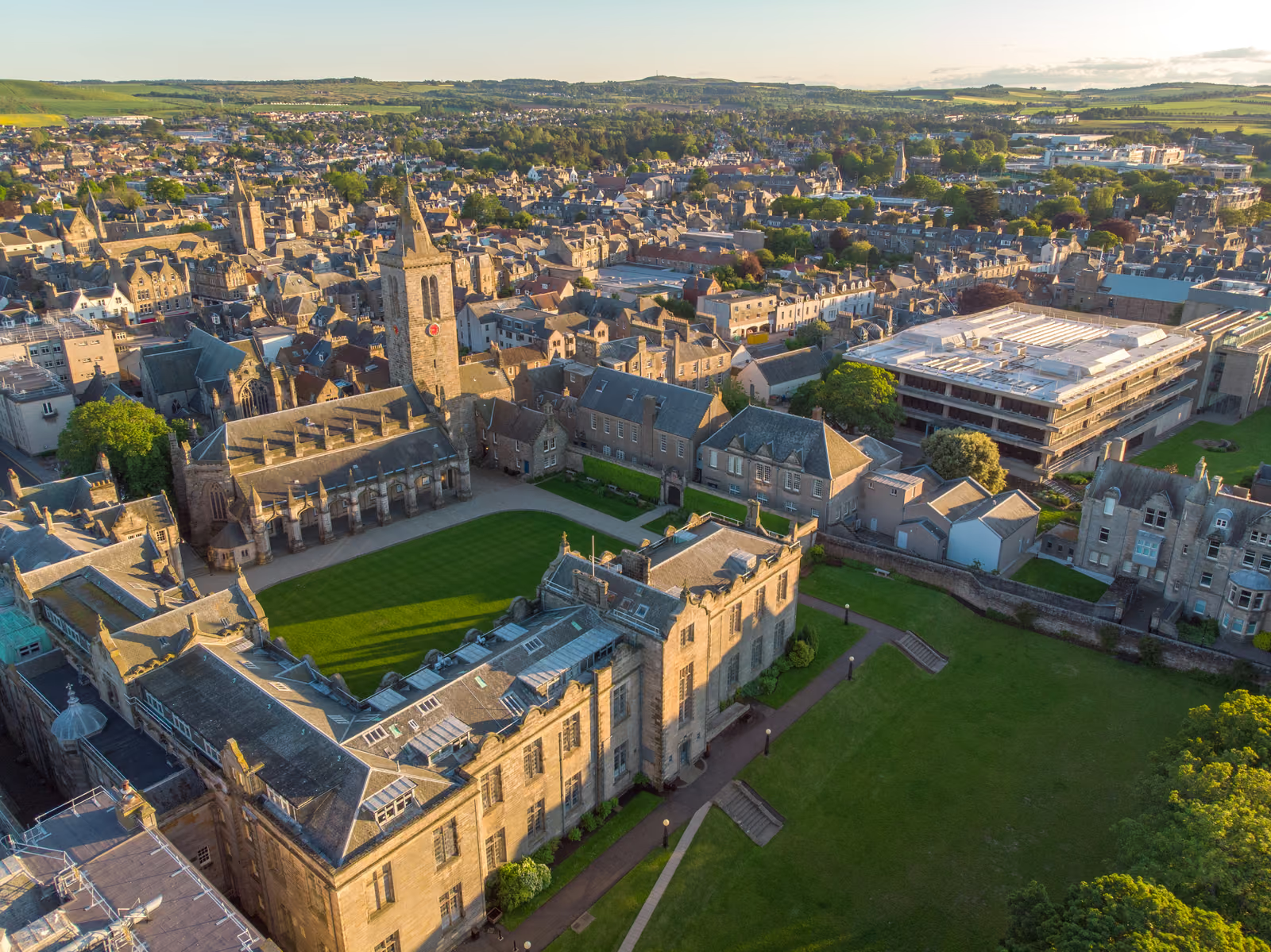
Last winter, I finally took the plunge and decided to get myself a drone. I had one final semester left in St Andrews, and since after 3 and a half years I felt like I'd exhausted all the shots that were available from the ground, I thought I'd use the drone to open up some new options.
The fact that I was planning on moving back to Tokyo was also a factor. Recreational drones are banned from all high-population density areas in Japan — which is essentially all of Tokyo — so this would be the last chance I would have to experiment with drone photography without having to travel somewhere.
The drone I got is the DJI Mavic Air. Overall, I'm happy with my choice: the camera is good for both stills and video, the gimbal offers excellent stabilization, and it's mostly steady while it's flying. My only complaint is that the signal becomes unreliable at relatively modest distances — at around a few hundred meters — although this may be due to EU restrictions on the strength of the signal the controller is allowed to emit.
After spending a number of months with the drone, here are my thoughts.
Composing shots
One of the challenges with drone photography is that, unlike with regular photography, you can't really tell what a shot will look like until you actually get your drone up there. Although you can do a bit of guesswork from the ground, at the end of the day you can't really walk around town looking for good shots like you can with a regular camera.
At first I thought I would just fly the drone around and see what I got, but since you only get around 15 minutes of battery life, there's not that much exploring you can do before the low battery warning appears. I ended up resorting to using Google Earth and looking for locations that seemed promising before actually flying the drone. Continually going back home to charge the battery was too much effort.
Angles and framing
A lot of drone photography you'll find on the internet is shot from a straight vertical angle. This may be the best option if you want to go for the novelty factor, since it gives you a completely different perspective even on familiar subjects, but it also does have its downsides.
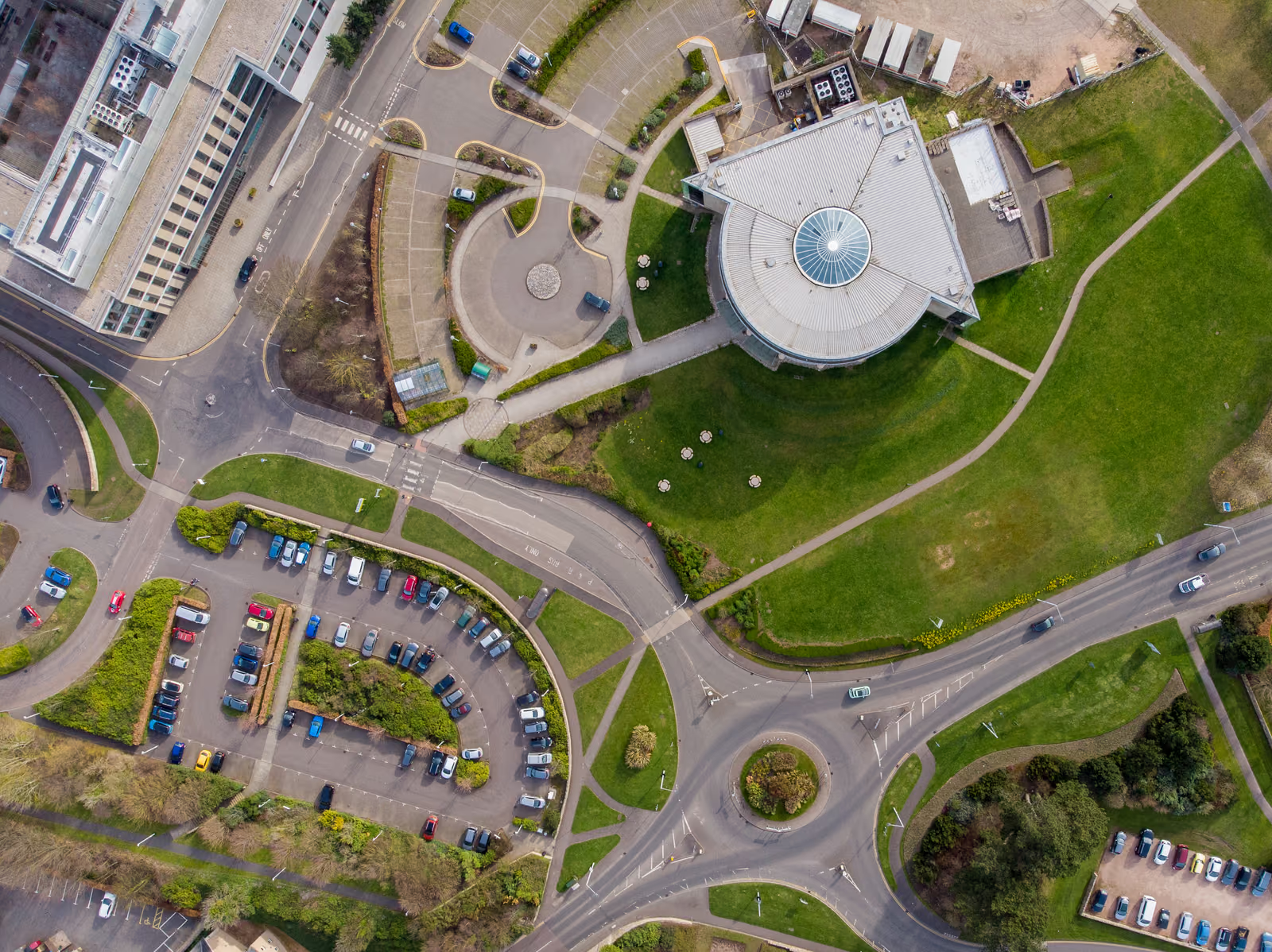
- It's difficult to show scale from this angle. One of the places where aerial photography shines is in showing scale. Although this can be done — by including a few cars in the shot, for instance — oftentimes you'll end up with a photo where it's difficult to tell how big the subject is.
- Focusing on a single subject is difficult. You don’t want your shot to get too cluttered — you want a single subject for the viewer to focus on, and let everything else complement it. However, most of the things you want to shoot won't be surrounded by empty fields, making this rather difficult.
- Drones don’t let you go that high. With the Mavic Air, I found that I started to lose signal at around 200 meters in altitude, although your mileage may vary depending on your model and the conditions. While this may seem like plenty, it often wasn’t enough to capture as much as I’d like. Most buildings at my university were too large to fit in a single shot from this altitude.
- Most buildings just aren’t interesting to look at from straight overhead. Although this is coming just from my experience in St Andrews, I assume the situation is similar in most places. Many interesting aspects of the buildings in town — steeples, for instance — are utterly boring to look at from straight overhead.
I found I preferred keeping the camera at around a 45 degree angle from the ground and shooting at lower altitudes. I found that this allowed me to communicate scale better, and also tended to bring out the three-dimensional structure of the town's architecture better. This is even more true when shooting video, since you can actually see objects coming closer and moving further away, whereas when you're shooting straight down, everything basically stays at the same distance from the drone.
Additionally, while shooting from straight above tends to flatten the image and can result in a fairly monotonic image, it’s fairly easy to capture clear shadows and highlights from this angle. Flying your drone at around sunrise and sunset can give your subject more contrast as well.
All of that said, I definitely haven't experimented enough to settle on any particular style for drone photography, so I'll keep on trying new things and write updates as my opinions evolve.