Thoughts on What Happened by Hillary Clinton
November 5, 2017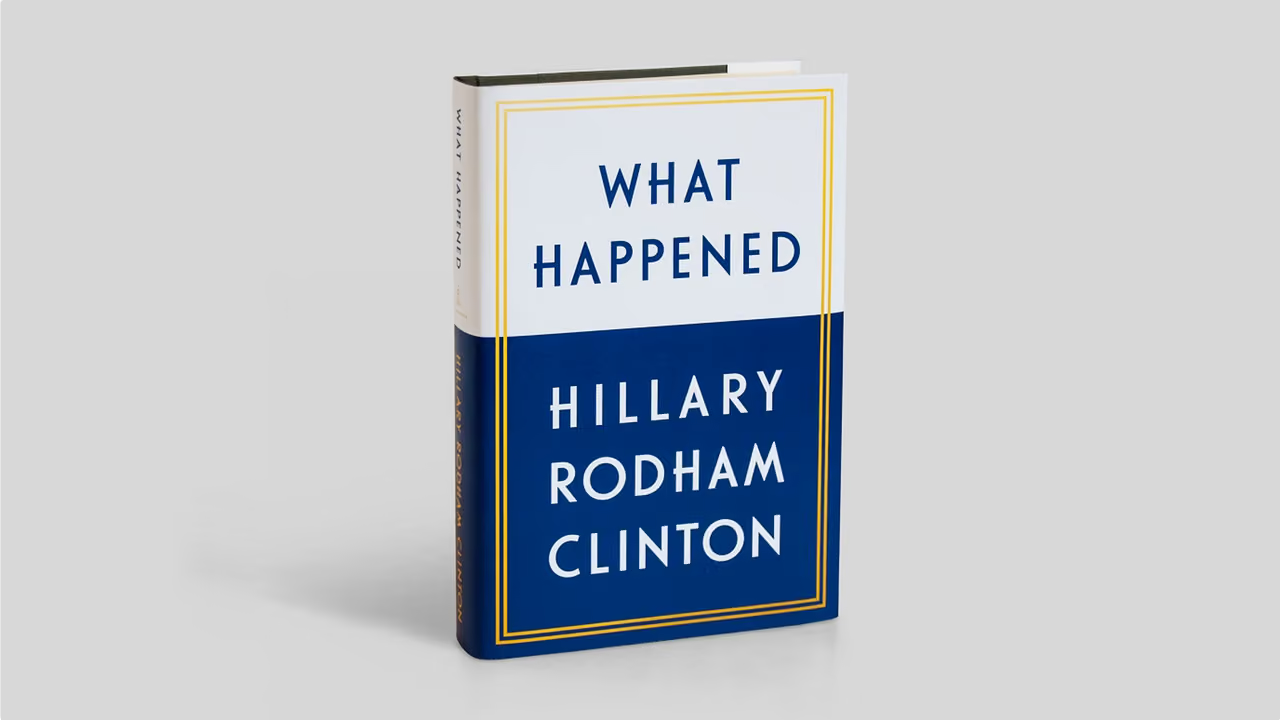
A story of a politician amongst forces beyond her control
I remember reading Hillary Clinton’s previous book, Hard Choices, around 2 years ago. That book gave us a carefully guarded account of her time as Secretary of State: a narrative more focused on not offending anybody rather than proactively selling herself to anybody who had yet to make their mind about her.
It glazed over what must have been excrutiating parts of her tenure and described various world leaders on much more favorable terms than where her actual opinions must have been. Decades of having her every move painted as the actions of a shrewd, corrupt woman working in the shadows had left their mark, and it showed in her writing.
What Happened shows us that although old habits don’t die easily, the weight has most certainly fallen off of her shoulders. Freed of her role as the de facto defender of the current political system, she’s much more open about her frustrations with both the system and the people involved.
The world is not a friendly place to Hillary Clinton right now. Much of Trump’s base believes that she is a criminal who, had the system not been so thoroughly corrupt, would be in jail right now. Much of the Bernie Sanders faction of the left is still convinced she and the DNC stole the nomination from their candidate.
Not even those who supported Clinton during the election are necessarily on here side at this moment. Some are still infuriated that she lost what at one point seemed like an insurmountable lead and let the presidency fall to a man who clearly has no business being president. Some are mad that she’s publishing this book and keeping the conversation from moving past the election.
The natural question to ask here is: how much of this anger is justified? How much of this is the other players in the system—other politicians, the media, activists—refusing to take a critical look at their own failings?
Obviously a book written by the candidate herself is not the best material to make this judgment off of, but the vast majority of the defenses she gave in this book seemed fair. She wasn’t oblivious to her own shortcomings as a candidate, but she believed (perhaps too optimistically) that once she got into office she would get meaningful work done and the accomplishments would speak for themselves. Now, one can only imagine.
The book is focused on how lopsided the playing field in 2016 was, not just because of who the other candidate was, but because of how differently the other players were acting. I think this a largely accurate.
There was never an election where the FBI swung the votes like it did in 2016. It was the first time a foreign country engaged in cyber espionage (although I tend to think that its extent is exaggerated). Bernie Sanders distorted voters’ impressions of what was within the realm of political plausibility.
She describes how the media dealt with the election in especially vituperative terms, and rightly so. There has been much talk of the media’s problem of “false equivalency”—that their tone in covering the two candidates was roughly the same, giving voters the impression that they were equally flawed.
But the real story in the coverage of the 2016 election was how abnormal coverage of the Clinton campaign was. No candidate would have had their scandals blown out of proportion the way Clinton’s were. No candidates emails would have captured the public’s imagination in the way that Clinton’s did.
One of the ways in which the 2016 campaign was unique that often goes untold is that one of the candidates had a whole partisan infrastructure dedicated to bringing her down, and was facing a public that was conditioned to be skeptical of her over the course of at least a quarter of a century. The problem wasn’t false equivalency. It was a media landscape tilted heavily against Hillary Clinton.
Much criticism has been levied at Clinton at this book for pointing the finger everywhere except for herself, and that is indeed what this book does—but I think that is also where the blame rightly lies.
This article will probably make me sound more of a Clinton fan than I actually was, but the point I want to make is that whatever you thought of her politics and policy proposals, her campaign strategy was sound. Any errors she made were well within the realm of the ordinary.
Barring all of these other abnormal circumstances, she would have won. The election post-mortems, more than anything, reveal a Democratic party incapable of assessing its own failings—a troubling state of affairs, as the midterms roll closer.